Nestbox Occupancy Research Project
Project Introduction
In 2023, we began our current research project ultimately looking to answer the question:
“How likely is it that a newly erected Barn Owl nestbox will be used by a Barn Owl, or other species?”
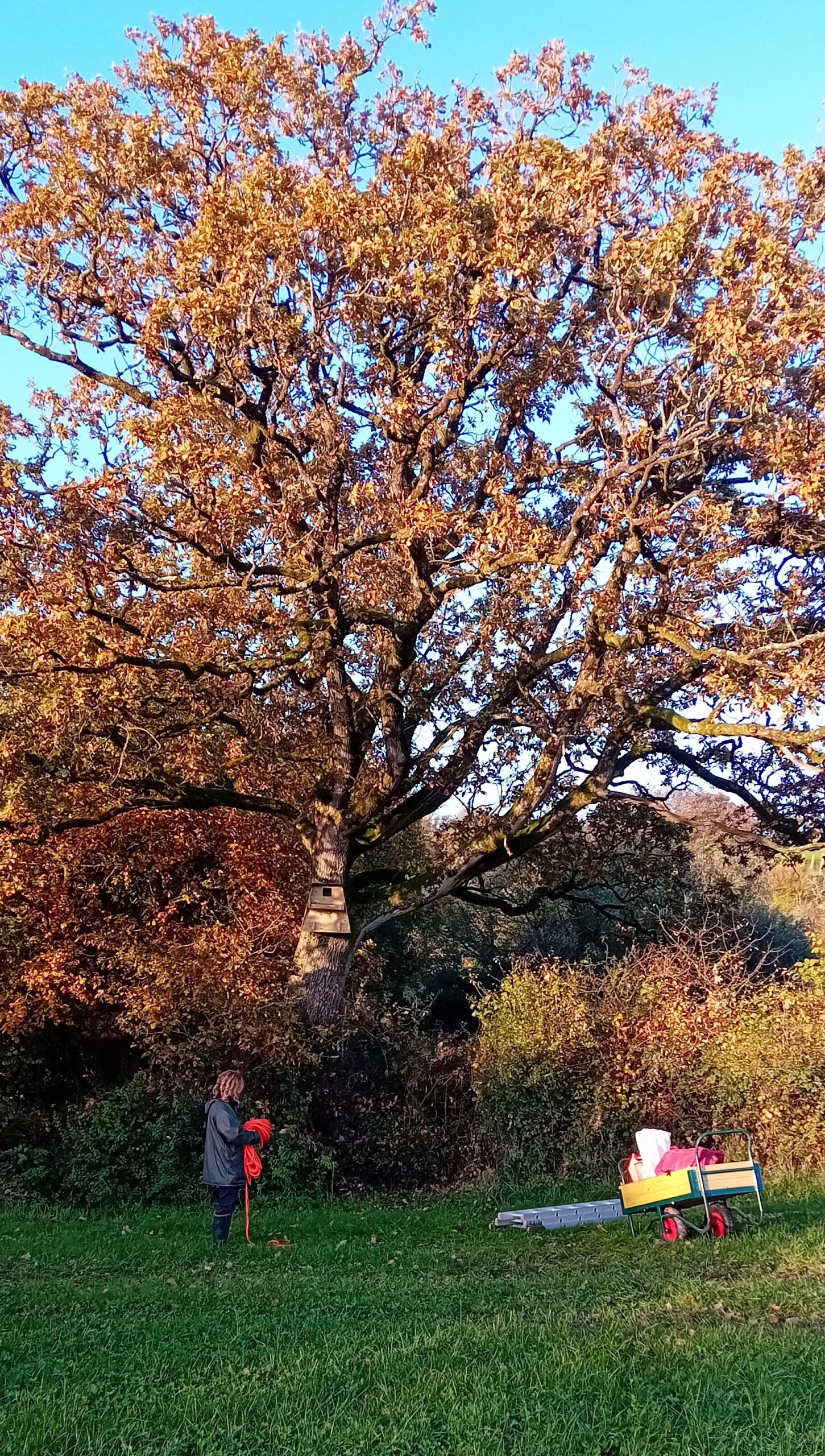
The project involves our Conservation Team installing a total of 90 new nestboxes over 3 winters and monitoring how quickly, if at all, they become occupied and by what species. At the time of installation, we are noting down variables, such as height, aspect, and pre-existing evidence of Barn Owls, then following up the installations with annual summer monitoring for 3 years. During our summer checks (which fall within the typical Barn Owl breeding period), we are looking for evidence of use by any species and we are also surveying the land around the nestbox, noting the land use and habitat types, in order to explore how habitat may influence nesting. Although we have been guided by strong anecdotal evidence for many years, resulting in lots of nestbox successes, our hope is that the data we collect might tell us more solidly the factors that help successfully attract Barn Owls.
We already monitor around 90 nest sites annually across Devon, so we will be surveying these too and using them as our basis for comparison.
December 2025 Update
We have the rest of this winter to install the final 13 (and counting…) nestboxes in new sites with no existing nestboxes. We had originally found locations for nestboxes through a social media callout, which garnered much more traction than we anticipated at the time! Now, we have changed tack and are approaching land-based businesses in the areas where we have large gaps on our map of Devon. If you receive an email from us out of the blue, this is why!
The nature of installing 30 boxes per winter and then monitoring these boxes for 3 years thereafter means that summer 2026 is going to be the peak of the study! We will still be checking those boxes installed in 23/24, plus the ones from last winter 24/25 and the ones we are erecting now! Add to the mix our existing 80 monitoring sites and we’re in for a wild ride. We reckon that the Conservation Team will be setting out to check around 160-170 nestboxes next summer, across all corners of our county, from Croyde all the way to Dartmouth and everywhere in between.
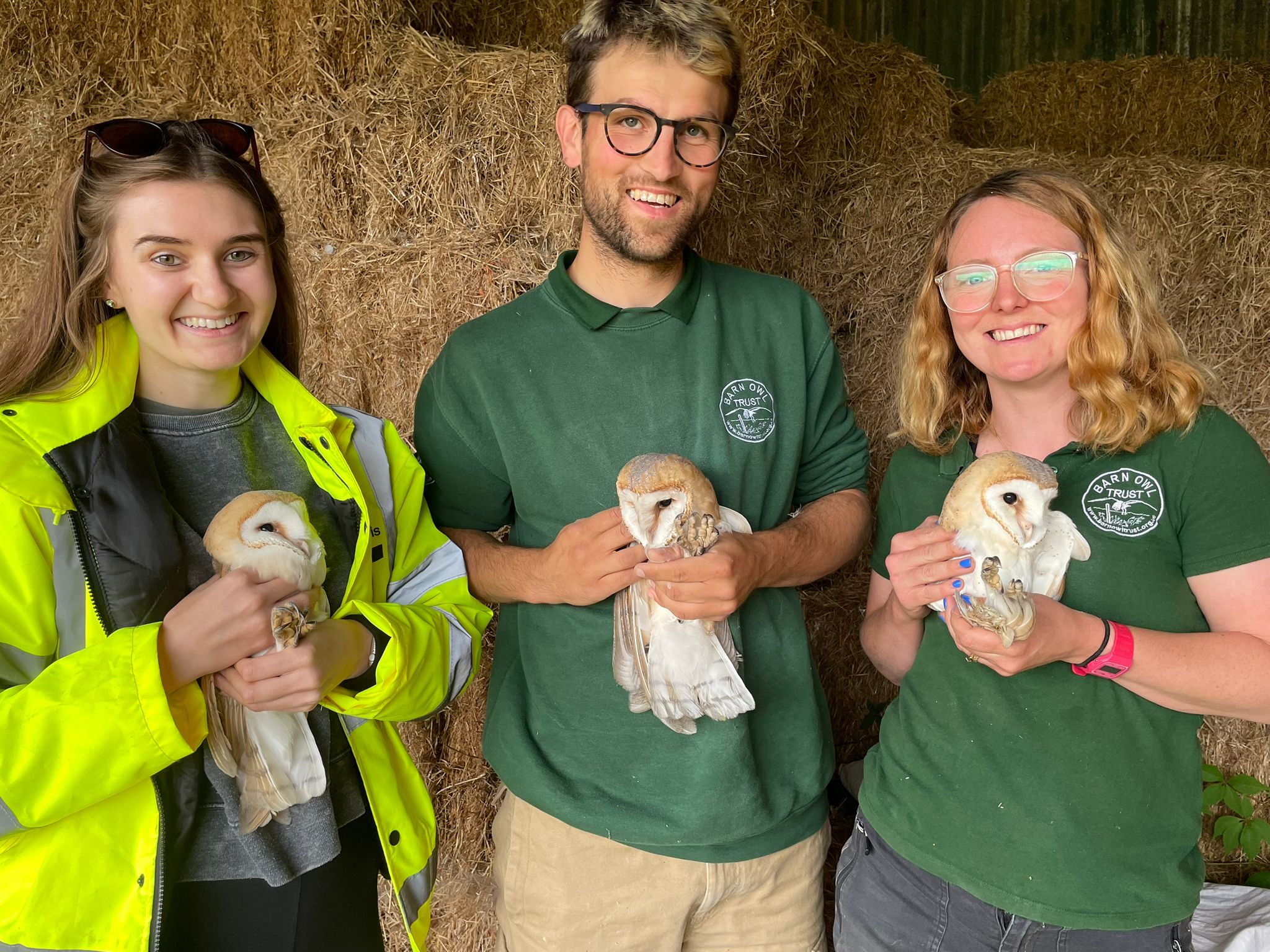
Don’t worry, we have anticipated this leap in our fieldwork and excitingly hired some more hands within the team to help.
Results from last year’s new boxes weren’t too exciting on the Barn Owl front unfortunately, with only a few being used as an occasional roost. We seemed to provide new homes for a large proportion of Devon’s Stock Dove community though!
If you are interested in keeping up with the general population trends, our wonderful Senior Conservation and Science officer, Pip, is busying away as we speak to crunch the numbers and get 2025’s report out in the new year. This will be available on our website. All previous reports are already available to read at your leisure. We must thank all of the other contributors who go out of their way to monitor Barn Owls across the country.
December 2024 Update
Our second winter of nestbox installations for our project is well underway. We are flying along, having already installed 23 out of the allotted 30 by mid-December 2024. We will cease installations by the end of February and then return to check them in the summer.
Out of our first year of nestboxes erected in winter 2023/24, our summer checks returned 3 Barn Owl nests, 8 Stock Dove nests, 1 Jackdaw nests and 2 Squirrel dreys. Unfortunately, 14 of the boxes were still completely empty, so it will be interesting to return to them a year on next summer and see whether anything has found them yet!
As the project is rolling, and boxes are going up in cohorts of 30 each year, we won’t be writing up our overall findings for a while yet…. All being well, our final summer of monitoring will be in 2028!